

Brightening / Melasma / Redness / Blemishes[Intensive Removal in a Short Period] Lentigo Laser
![[Intensive Removal in a Short Period] Lentigo Laser](/_next/image?url=https%3A%2F%2Ffirebasestorage.googleapis.com%2Fv0%2Fb%2Fkkeutguro-7e583.firebasestorage.app%2Fo%2Fproducts%252Fguro%252Fen%252F1758789693757_edd8536b-54b2-4787-9959-00922c26ceb2_004-ezgif.com-png-to-webp-converter__1_.webp%3Falt%3Dmedia%26token%3D34c92d1c-9de4-4ec5-85ac-76e946c050e3&w=2048&q=75)
[Intensive Removal in a Short Period] Lentigo Laser
This laser treatment is tailored to your skin condition, allowing even busy modern people to reduce their burden and more intensively improve lentigo. *VAT separate
Options
Treatment Details


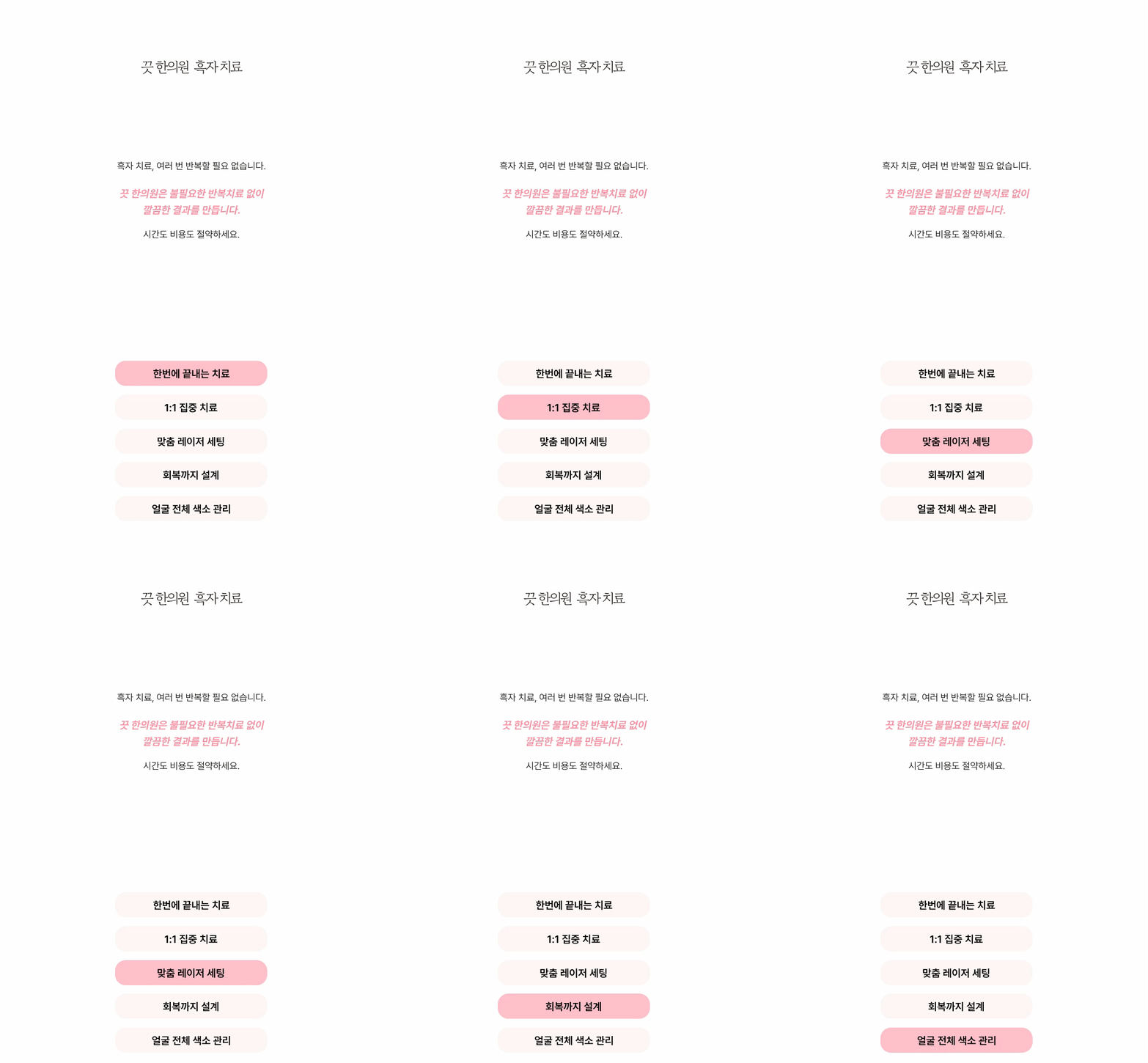
Lentigo laser treatment can yield significant improvement in a short period.
Concerns about lentigo can be alleviated with an efficient approach.
For dark and distinct lentigo, we primarily perform precise removal using a 532nm Nd:YAG laser.
Subsequently, for any remaining pigment or faint lesions, an Er:YAG (Erbium YAG) laser may be additionally used to promote further improvement.
In most cases, satisfactory results can be achieved with 2-3 treatment sessions, but individual differences may occur.
Through precise diagnosis and planning, we reduce the burden of unnecessary repeat treatments and help you achieve desired improvements through an efficient treatment approach.
Lentigo treatment can lead to skin improvement through a cautious approach and professional procedures.
Why We Focus on Meticulous Treatment
We prioritize the quality of treatment and ensure sufficient focus by adjusting the number of patients seen per medical staff member per day.
This is a deliberate limitation on the number of patients to ensure deep concentration on each consultation, allowing us to dedicate ample time to each individual.
This approach allows us to provide detailed explanations at every stage, from consultation to treatment and post-care, and helps in creating personalized plans. It creates an environment where we can focus on delicately observing skin conditions and reactions and incorporating them into the treatment.
As a result, the precision of the treatment is enhanced, enabling meticulous care that considers individual skin characteristics, rather than just repetitive procedures.
We focus on individual skin improvement rather than just the time spent on treatment. Our principle is to approach each patient's skin condition with genuine care.
Treatment Settings Considering Individual Skin Conditions
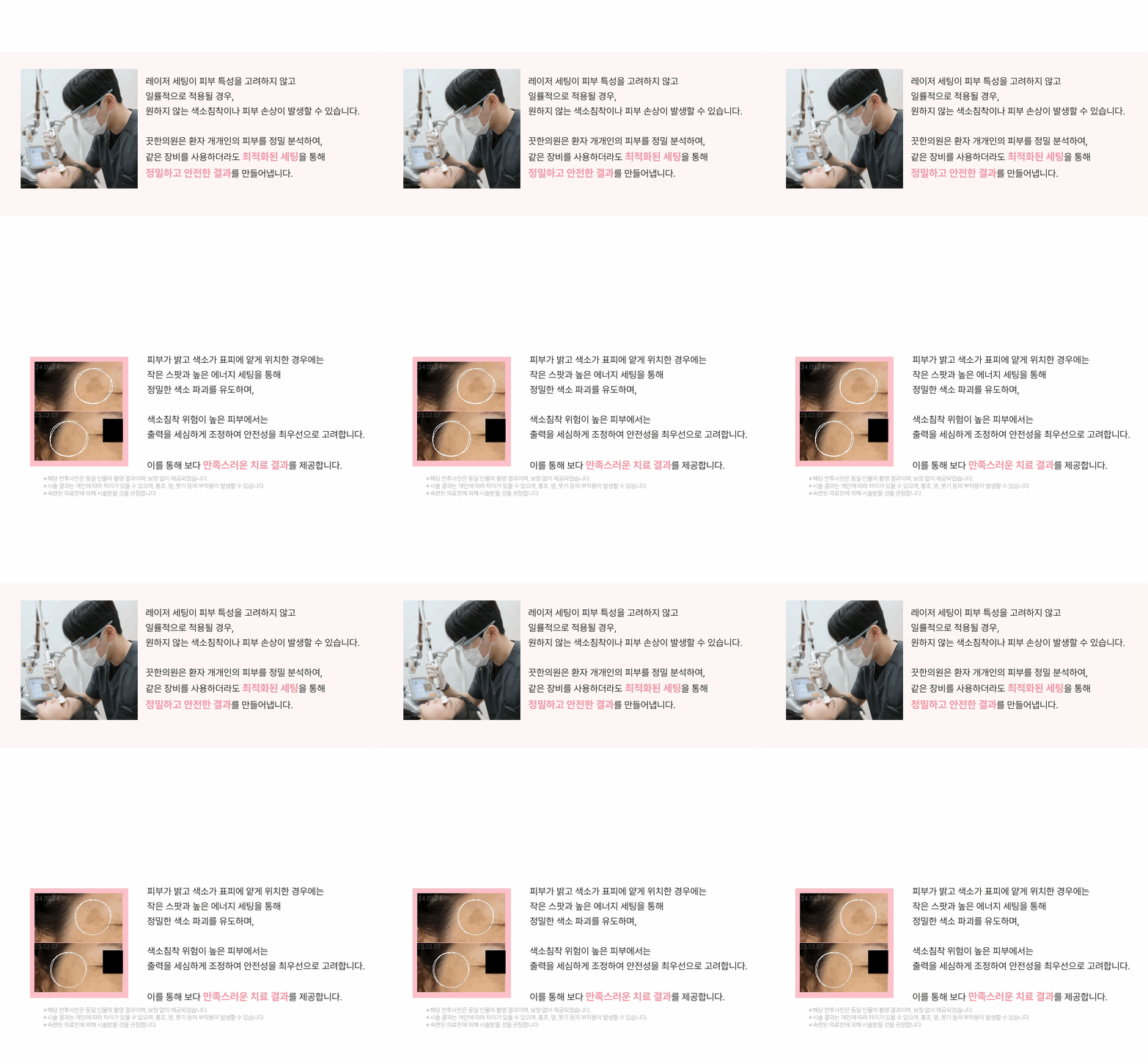
We comprehensively consider the patient's skin tone, lesion size and depth, and skin reactivity to adjust detailed laser settings such as spot size, pulse energy, and fluence.
For example, if the skin tone is light and the pigmented lesion is shallow, we precisely irradiate with a small spot size and high energy. Conversely, for skin prone to post-inflammatory hyperpigmentation, we can proceed with treatment by adjusting the output to minimize the burden.
These subtle settings can enhance the precision of the treatment even when using the same laser equipment, contributing to achieving desired improvements
and are important considerations.
Considerations for Post-Treatment Recovery
The 532nm laser induces a rapid reaction, so scab formation or temporary redness may occur after treatment. Therefore, thorough skin regeneration and UV protection management are essential.
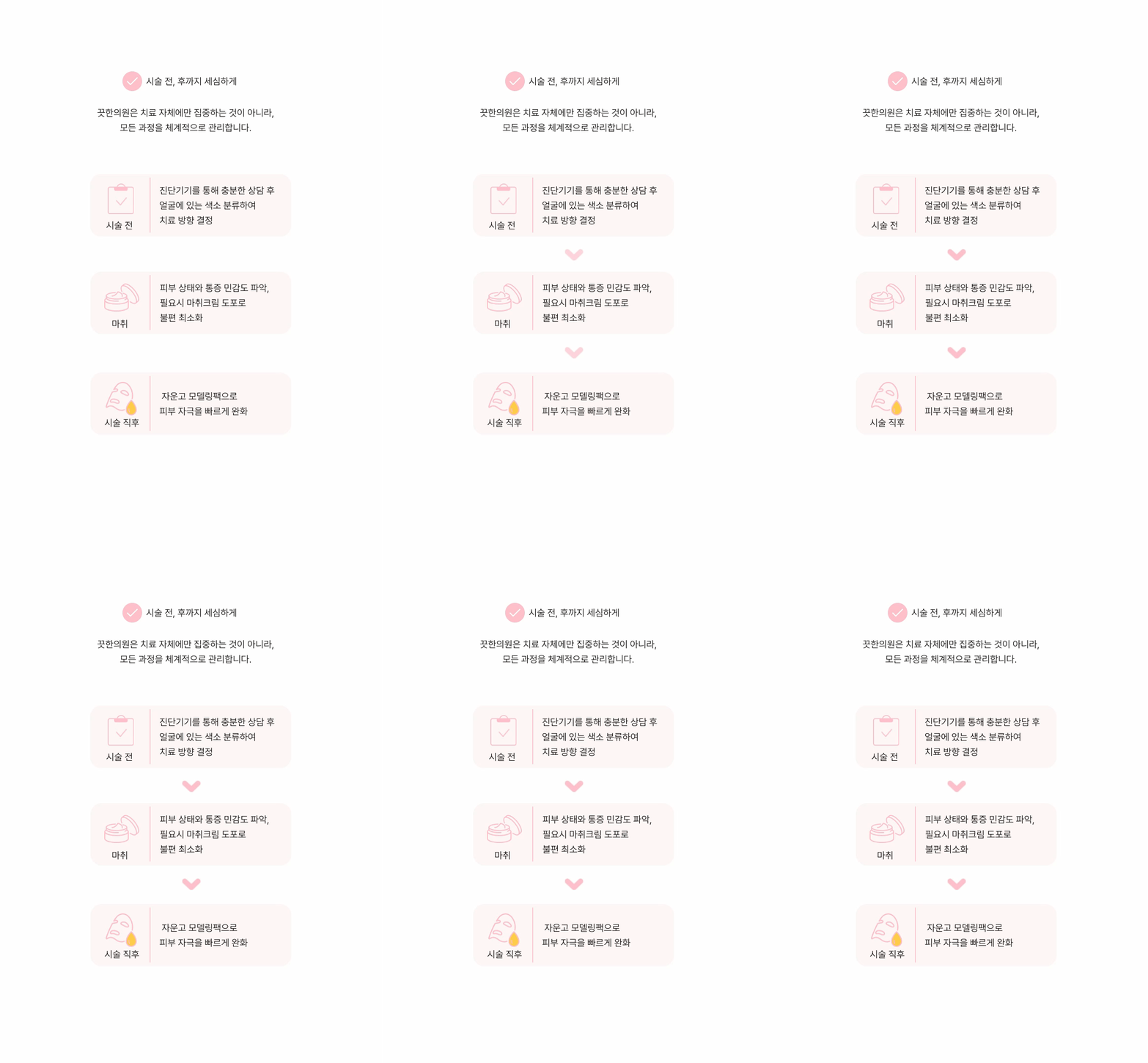
When performing 532nm laser and additional Erbium YAG laser treatments, each patient's pain sensitivity may vary. Considering this, the use of anesthetic cream is determined during pre-consultation, and after treatment, cooling and a Jaungo modeling pack are used to soothe the skin.
Furthermore, Duoderm is available within the clinic for skin recovery and protection from UV rays.
Personalized Treatment Considering Overall Pigmented Lesions, Not Just Lentigo
Many individuals who visit for lentigo removal often have other dermal pigmented lesions, such as melasma, in addition to lentigo.
Of course, focusing solely on lentigo removal is important, but we also anticipate the desire to improve overall uneven pigmented lesions together.
Through in-depth consultation with the patient and utilizing diagnostic equipment, we analyze facial pigmented lesions and jointly discuss and decide on the treatment direction, such as whether to target only epidermal pigments or to consider overall pigment improvement.
This helps in achieving a clearer and brighter skin tone.
Causes of Lentigo Formation
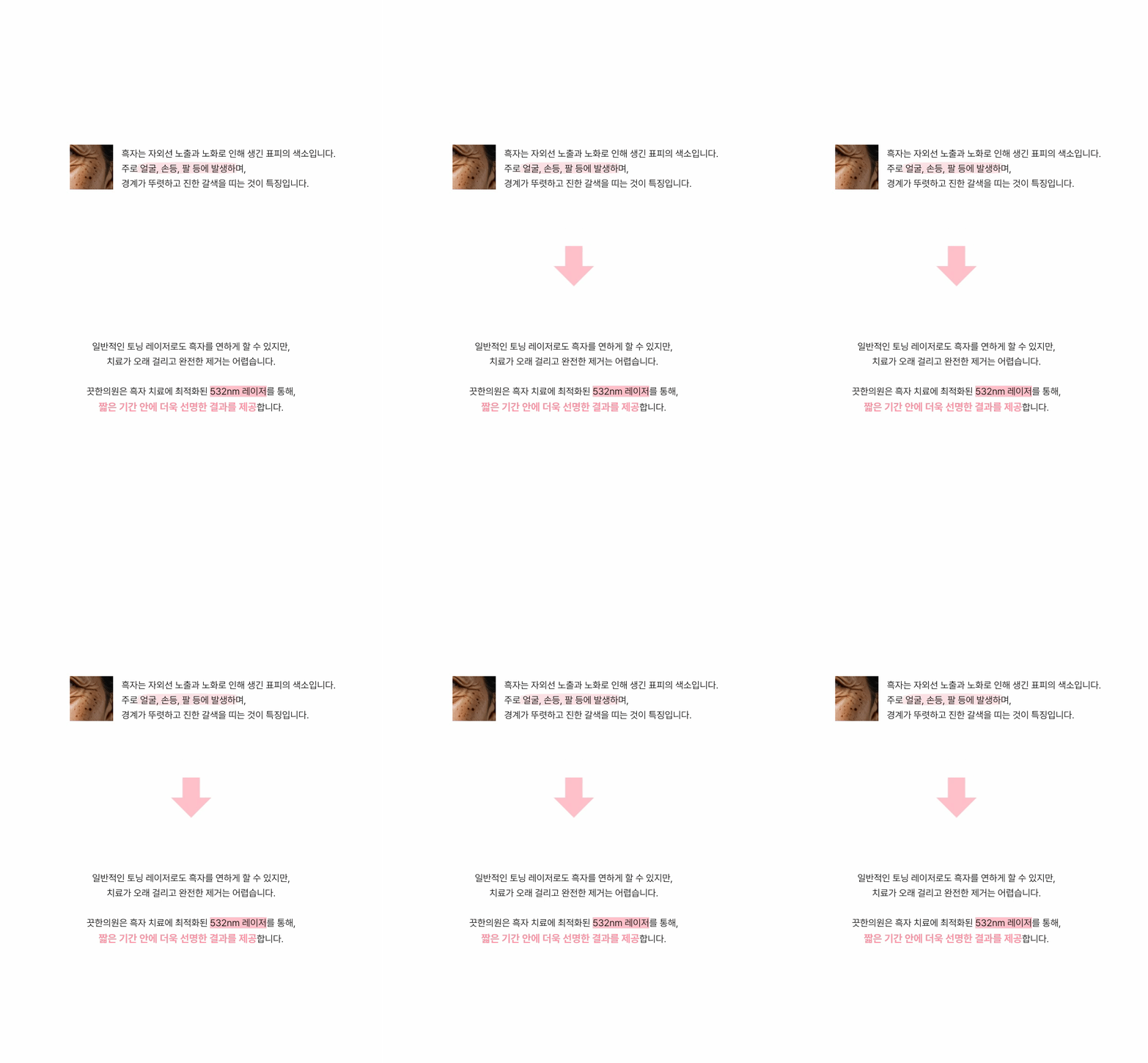
Generally, solar lentigo is a flat, brownish pigmented lesion that develops from UV exposure and the skin aging process.
This refers to a condition where pigment excessively accumulates in a specific skin area due to the overactivity of melanocytes.
Continuous exposure to UV radiation leads to ongoing melanin production,
and as we age, the skin's regenerative capacity and pigment processing ability decrease, causing pigmented lesions to gradually darken and enlarge.
They are primarily observed on the face, back of the hands, and arms, and typically characterized by clear borders and a dark brown color.
Positional Characteristics of Lentigo Lesions
Solar lentigo primarily appears confined within the epidermis, the outermost layer of the skin.
Specifically, it occurs when melanocytes located in the basal layer of the epidermis become excessively activated due to UV stimulation.
This leads to a pattern where melanin pigment accumulates intensely in specific areas.
Histologically, lentigo does not penetrate the dermis but remains as an excessive deposition of melanin pigment within the epidermis.
Compared to surrounding healthy skin tissue, the borders are often relatively distinctly demarcated.
Due to these characteristics, lentigo can respond well to treatments targeting the epidermal layer, such as Q-switched 532nm lasers.
The target for this treatment differs from melasma or mixed pigment lesions that affect the dermal layer.
532nm Laser Wavelength
The 532nm wavelength is a green-spectrum wavelength with a high melanin absorption rate. It is characterized by selectively delivering energy to pigment lesions that primarily occur in the epidermal layer of the skin.
The 532nm laser, predominantly utilizing a Q-switched method, instantaneously delivers high-power energy in very short pulses, lasting only a few nanoseconds. This is designed to effectively destroy only pigment particles while minimizing damage to surrounding tissues.
The short, pulsed light is selectively absorbed by melanin, converting into thermal energy while simultaneously inducing a photomechanical effect. Through this dual action, melanin particles are finely broken down.
Some of these broken-down pigments naturally shed along with the tiny scabs that form after the treatment. The remaining particles are absorbed by macrophages in our body and gradually expelled through the lymphatic circulation.
Through this pigment removal process, you can experience a gradual lightening or disappearance of visible lentigines. Treatment results may vary by individual.
Lentigo Removal Treatment
This laser wavelength is effectively utilized in lentigo treatments.
Successful treatment results are not solely determined by the choice of wavelength.
An integrated treatment plan, encompassing accurate diagnosis and customized treatment settings, is required.
When such a comprehensive approach is taken, it can lead to results that enhance treatment satisfaction.
시술 진행 순서
첫 상담부터 마무리까지의 실제 진행 순서를 확인하세요.
- 01
개인별 세안
- 02
마크뷰(Mark-Vu)를 이용한 정밀 피부 분석
- 03
개별 맞춤 상담
- 04
개인의 피부 상태에 맞는 레이저 설정 및 시술 진행
- 05
피부 진정 및 재생 크림 도포
시술 기본정보
시술 시간, 마취, 회복, 유지기간을 한 번에 확인하세요.
TIME
부위별 10~15분
ANESTHESIA
마취 없음
RECOVERY
일상생활 바로 가능
Q&A
고객님들이 가장 많이 물어보시는 내용을 모았습니다.
What is the recommended interval for the treatment?

Generally, we recommend treatments at intervals of about 3 to 4 weeks. This cycle considers the time needed for the skin to recover and for pigments to be effectively removed.
How many sessions are usually needed for lentigo treatment?
Based on 532nm wavelength laser treatment, many cases can expect improvement in lentigo with just 1-2 sessions. However, depending on various factors such as individual skin characteristics, the depth and size of the lentigo, and usual sun exposure habits, 2-3 repeated sessions may be recommended.