


[Prominent Yellow Lesions on Eyelids] Xanthelasma Treatment
![[Prominent Yellow Lesions on Eyelids] Xanthelasma Treatment](/_next/image?url=https%3A%2F%2Ffirebasestorage.googleapis.com%2Fv0%2Fb%2Fkkeutguro-7e583.firebasestorage.app%2Fo%2Fproducts%252Fguro%252Fko%252F1780304141362_1e6442e2-c6b7-4dab-b3ab-339c2d0a594c___________.__10_.webp%3Falt%3Dmedia%26token%3D28e9be0f-a448-4d39-a856-9ea00f4863bc&w=2048&q=75)
[Prominent Yellow Lesions on Eyelids] Xanthelasma Treatment
Curious about the identity of the yellow lumps around your eyes and how to treat them? Xanthelasma are lesions that appear yellow around the eyelids due to the accumulation of cholesterol components. Even sensitive areas like the eyes are carefully examined for the lesion's condition to achieve natural and neat improvement. *VAT not included
Options
Treatment Details


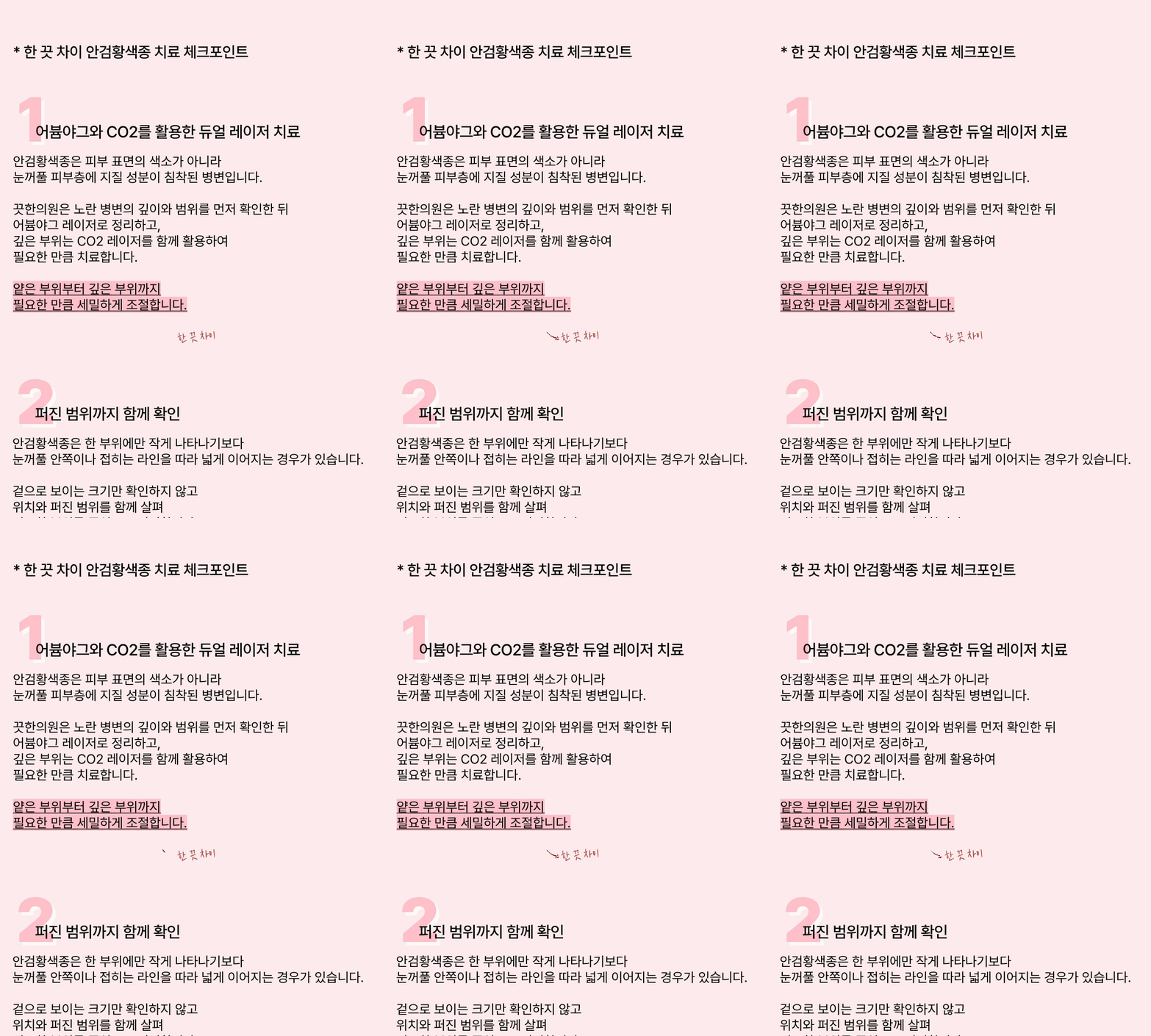


Do you feel uncomfortable due to yellow lesions around your eyes? Let's learn about xanthelasma treatment.
Many people are concerned about yellow deposits around their eyelids. These lesions can be expected to improve with treatment.
Xanthelasma refers to yellow, raised lesions on the eyelid skin caused by the accumulation of lipid components like cholesterol.
Since the skin surface is not flat and tends to be thickly raised, improvement may be difficult with simple ointments or topical treatments alone. Appropriate laser treatment may be necessary depending on the depth and extent of the lesion.
At Kkeuthan Clinic, by using a combination of Er:YAG laser and CO2 laser, we expect improvement in yellow xanthelasma lesions through a dual laser approach.
Kkeuthan Clinic's Xanthelasma Dual Laser Treatment Process
At Kkeuthan Clinic, when treating xanthelasma, we consider the surrounding skin environment rather than aggressively removing only the yellow areas.
Since the eyelids have very thin and sensitive skin, precise laser adjustment is necessary, carefully considering the thickness of the lesion, the depth of lipid deposition, and the texture of the periorbital skin. Furthermore, the possibility of scarring must also be considered.
Therefore, Kkeuthan Clinic approaches treatment by delicately refining the surface to a certain depth using an Er:YAG laser, and if the lesion is deep, finishing with a CO2 laser.
1. Assessing the Scope and Depth of the Lesion
Xanthelasma may appear as small yellow lesions on the surface, but it is common for them to be widespread beneath the skin or to have unclear boundaries.
At Kkeuthan Clinic, prior to treatment, we plan the removal area by comprehensively considering not just the visibly yellow areas, but also the thickness and spread direction of the lesion, and even the eyelid wrinkle lines.
Our goal is to adjust the height of the visibly protruding lesion and delicately refine the border areas to ensure a smooth connection with the surrounding skin.
2. Precise Layer-by-Layer Removal Using Er:YAG Laser
The Er:YAG laser is suitable for precise skin surface ablation and can be used to delicately control and remove lesions in thin and sensitive areas, such as around the eyes.
Er:YAG laser is used for precise removal of xanthelasma lesions, and there are reports indicating potential benefits in terms of recovery.
At Kkeuthan Clinic, instead of aggressively removing the yellow deposited lesion areas deeply in one go, we proceed cautiously, checking layer by thin layer from the skin surface.
This method can help minimize damage to normal skin while naturally adjusting the height of the lesion to match the texture of the periorbital skin.
3. Complementing the Base and Border Areas with CO2 Laser
Even if the yellow surface lesion of xanthelasma is removed, there is a possibility that it may reappear as a raised lesion if deposited tissue remains in the deeper base.
CO2 laser works on the principle of vaporizing or cauterizing lesional tissue and is known as one of the methods that can be used in the treatment of xanthelasma.
However, compared to the Er:YAG laser, redness or scarring may persist longer, making it difficult to use as a primary standalone approach in some cases.
At Kkeuthan Clinic, after precisely refining the lesion with an Er:YAG laser, if necessary, the remaining base and border areas of the lesion, which are prone to recurrence, can be carefully treated with a CO2 laser.
Rather than simply burning with strong energy, it is important to meticulously control the laser output and treatment area, carefully considering the depth of the lesion and the condition of the eyelid skin.
4. Natural Results Tailored to the Periorbital Skin Texture
Xanthelasma treatment is not merely about removing yellow lesions.
Since the eyelids have thin skin, even small scars or subtle color differences can be easily noticeable. Therefore, a finish that naturally blends with the surrounding skin is important to prevent an uneven skin surface after removal.
At Kkeuthan Clinic, we strive to gently refine not only the central part of the lesion but also the border areas, so that the eye area can recover as naturally as possible after the procedure.
5. Treatment Approach Considering the Possibility of Recurrence
Xanthelasma is a lesion with a possibility of recurrence even after removal. Especially if it's related to lipid metabolism or cholesterol levels, it may reappear after the procedure, so it's advisable to consult with a specialist for blood tests or lifestyle management as needed.
At Kkeuthan Clinic, considering the size and depth of the lesion, we recommend a phased treatment approach, reducing the risk of scarring or pigmentation rather than aggressively removing it deeply in one session.
Alongside the removal of the lesion, the aesthetic recovery of the periorbital skin is also considered important.
Expected Effects of Xanthelasma Dual Laser Treatment
Helps remove yellow deposited lesions around the eyes by reducing the possibility of scarring
Thin and delicate layer-by-layer ablation possible using Er:YAG laser
Complementing the base and border areas possible through CO2 laser
Delicate power adjustment suitable for thin and sensitive areas like the eyelids
Customized treatment considered based on lesion size and depth
Border area refinement for a natural blend with surrounding skin
Can help improve periorbital protrusion, yellow discoloration, and overall impression
If you are concerned about any of the following:
If yellow deposits are observed on your eyelids or around your eyes
If you have lesions that appear like melasma but are yellowish and raised
If you have bothersome yellow lesions around your eyes that are not easily covered by makeup
If you notice the lesions gradually widening or growing larger over time
If you have significant concerns about scarring or hyperpigmentation after treatment around the sensitive eye area
If the lesions have reappeared in the same location despite previous removal
If you prefer precise removal using a laser rather than surgical incision
If you are concerned that yellow lesions around your eyes make you look tired or older than you are
Treatment Procedure Guide
STEP 01. Personalized Consultation
A specialist directly diagnoses whether the yellow lesions around your eyes are xanthelasma, and thoroughly checks the exact scope and depth of the lesions.
STEP 02. Preparation of Treatment Area
Before the procedure, the skin around the eyes is thoroughly cleansed, and the areas requiring removal are carefully marked.
STEP 03. Local Anesthesia Application
Anesthetic cream is applied to minimize any discomfort around the eyelids that may occur during the procedure.
STEP 04. Precise Removal using Er:YAG Laser
The yellow deposited lesions are delicately removed layer by layer from the skin surface to minimize damage to surrounding tissues.
STEP 05. CO2 Laser Application and Finishing
If necessary, a CO2 laser may be used to meticulously refine the base and borders of the lesion for finishing.
STEP 06. Application of Regenerative Cream
Post-Procedure Precautions
ㆍImmediately after the procedure, redness, swelling, stinging, oozing, and small scabs may appear in the treated area.
ㆍDo not forcibly remove any scabs; allow them to fall off naturally for proper skin regeneration.
ㆍIt is recommended to consistently manage the treated area with regenerative cream or moist dressing products like Duoderm or Duogel to prevent dryness.
ㆍAvoid rubbing or scrubbing the area around your eyes vigorously during the recovery period.
ㆍIt is advisable to refrain from using cosmetic makeup (such as eyeshadow, eyeliner) until the treated area has fully recovered.
ㆍIt is recommended to avoid jjimjilbangs (Korean bathhouses), saunas, swimming pools, alcohol consumption, and smoking for at least one week.
ㆍStrong UV exposure can cause hyperpigmentation, so please pay special attention to sun protection when going outdoors.
ㆍIf the depth or width of the lesion is significant, complete removal with a single procedure may be difficult, and multiple repeated treatments may be necessary.
ㆍXanthelasma may recur even after treatment, depending on the patient's constitutional factors or lipid metabolic status.
진료 및 시술 절차
첫 상담부터 마무리까지의 실제 진행 순서를 확인하세요.
- 01
개인별 맞춤 진료 상담
Q&A
고객님들이 가장 많이 물어보시는 내용을 모았습니다.
How is xanthelasma treatment performed?

The treatment method for xanthelasma is determined by considering individual characteristics such as the size, depth, and location of the lesion. Typically, a laser may be used to precisely control the area where cholesterol has accumulated. For detailed information, it is best to consult with a specialist.